Planning a multi-country hunting safari opens up a world of diverse game, landscapes and experiences that a single destination simply cannot match. Imagine pursuing kudu and gemsbok across the red dunes of Namibia one week, then shifting to buffalo and sable in Zimbabwe or Mozambique the next. These cross-border itineraries deliver variety that dedicated hunters crave, from plains game to dangerous game, while supporting conservation across multiple ecosystems. Yet the logistics of moving between nations with rifles, ammunition and eventually trophies demand careful preparation. This guide shares practical, field-tested advice to help you execute these hunts ethically and efficiently.
Start with destination pairing. Southern Africa offers the most straightforward combinations because of established hunting infrastructure and relatively compatible regulations. South Africa and Namibia form a popular pairing thanks to shared borders, similar species lists and outfitters who routinely handle both. Adding Zimbabwe or Mozambique introduces dangerous game opportunities but increases paperwork. Botswana remains more restricted for private firearm imports in many cases, so confirm current policy early. Research seasonal overlap first. The dry winter months from May through September generally provide the best visibility and animal concentrations across the region, though coastal Mozambique can stay productive later. Work with a single coordinating outfitter or professional hunter who maintains relationships on both sides of the border. Their local knowledge prevents costly mismatches in dates or species availability.
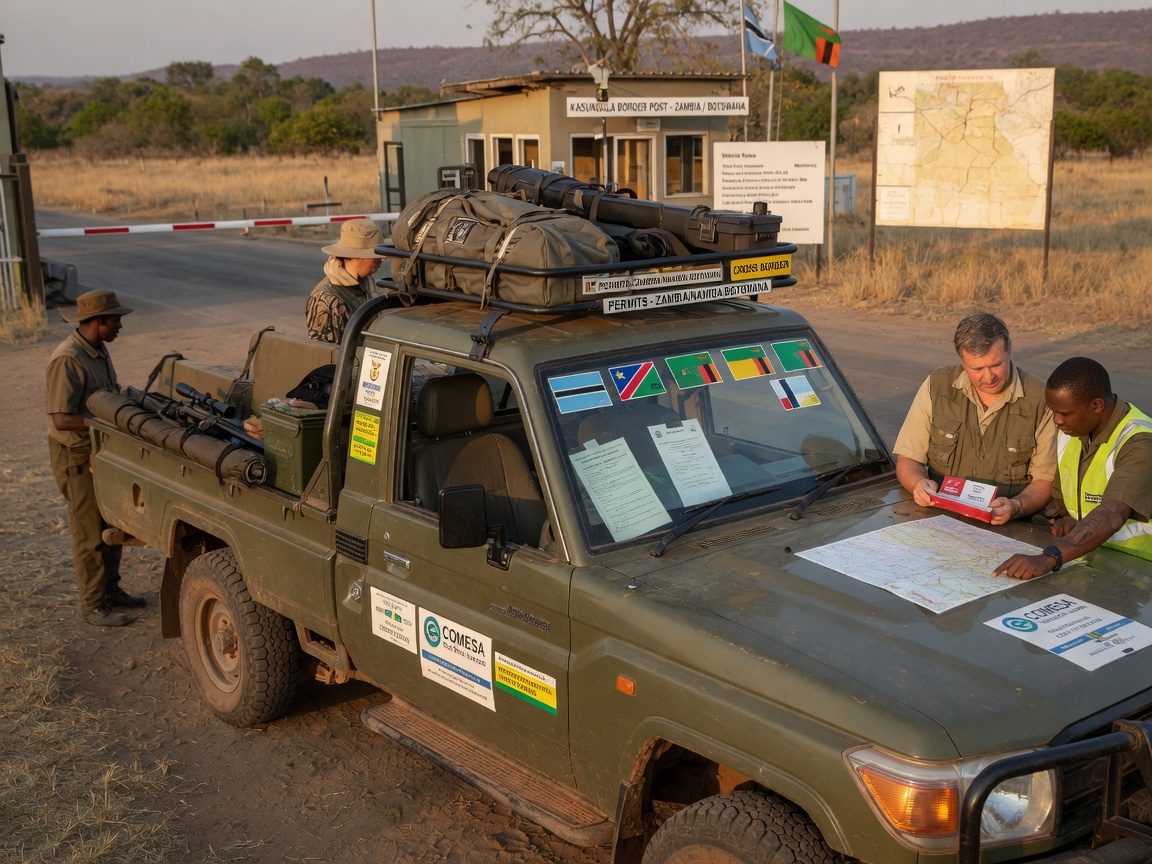
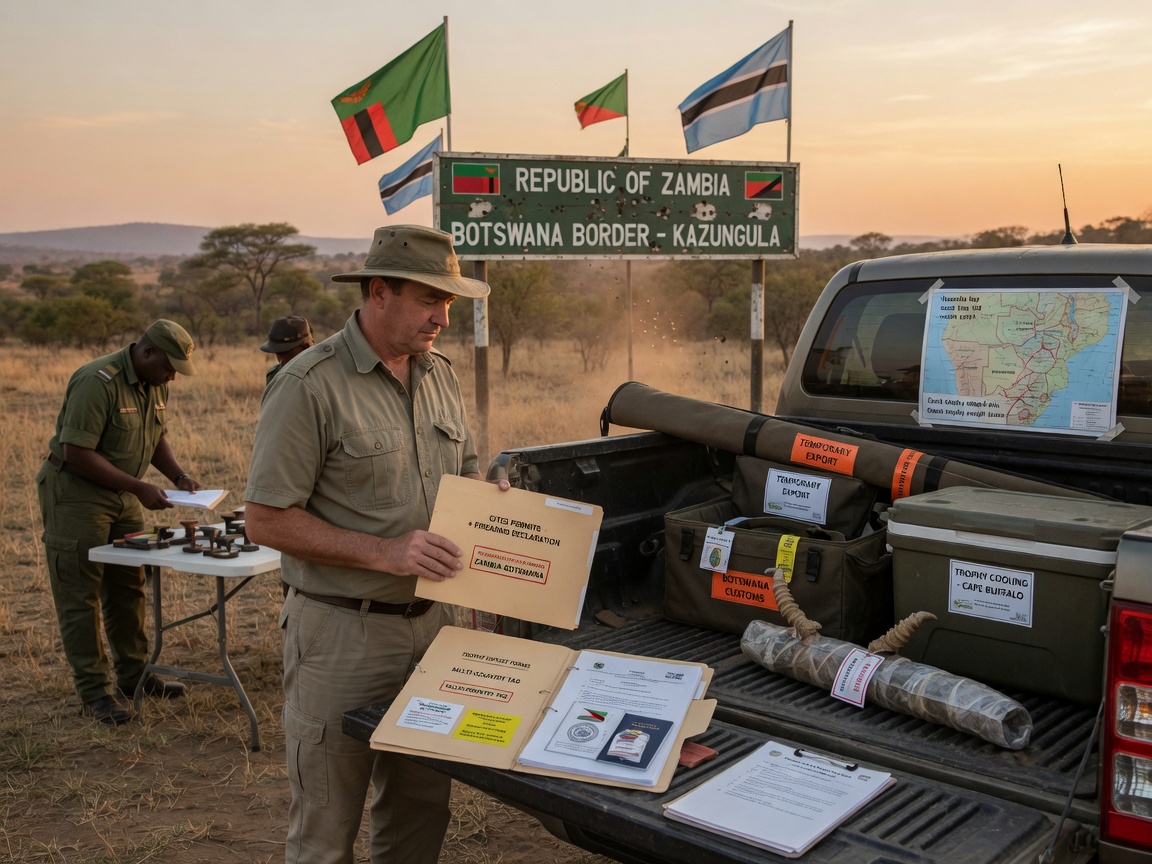
Legal requirements form the foundation of any successful crossing. Every country issues its own hunting license, often tied to a specific concession and species quota. Your professional hunter typically arranges these, but you must supply passport details, flight itineraries and sometimes a letter of invitation well in advance. Visas vary. Many hunters from the United States, Europe and Australia enter visa-free or obtain visas on arrival for short stays, yet multi-country trips can trigger additional scrutiny. Check reciprocity and duration limits for each nation. Firearm temporary import permits represent the most common stumbling block. South Africa requires the SAPS 520 application submitted weeks ahead, plus a police clearance or letter of good standing from your home country. Namibia uses a similar temporary import process through the police. Zimbabwe and Mozambique have their own forms and fees. Ammunition quantities are capped, frequently at 100 to 200 rounds depending on the country and caliber. Semi-automatic rifles face extra restrictions or outright bans in some jurisdictions. Always declare every firearm and serial number at each border. Undeclared items lead to confiscation or worse. Recent years have seen tighter inspections following isolated incidents, so carry printed copies of all permits and expect thorough checks.
Trophy handling adds another layer once the hunt succeeds. Each country controls export of hunted animals through veterinary certificates, dipping and packing requirements, and CITES permits for listed species such as leopard, elephant or certain antelope. Your taxidermist or shipping agent usually manages this, but you remain responsible for accuracy. Confirm that your home country will accept the trophies. United States hunters must navigate US Fish and Wildlife Service rules, which have fluctuated for certain African species in recent cycles. European Union and other destinations maintain their own lists. Plan extra time after the hunt for processing. Many hunters fly home first and have trophies follow months later. Budget for these shipping and permit costs separately from the hunt itself. Conservation-minded hunters should verify that their outfitter operates under legitimate quotas that fund anti-poaching and community programs. Ethical hunting across borders multiplies that positive impact when done correctly.
Health and safety considerations grow when crossing malaria zones or yellow fever areas. Consult a travel medicine specialist at least eight weeks out. Prophylaxis regimens differ by country, and some borders require proof of yellow fever vaccination if you arrive from an endemic region. Carry a well-stocked medical kit including trauma supplies, as remote concessions sit far from hospitals. Evacuation insurance that covers hunting activities and international borders is non-negotiable. Vehicle travel between countries often involves long dirt roads and official border posts that close at night. Factor extra days for delays. Overland transfers in a safari vehicle can be an adventure themselves, offering extra scouting time, but commercial flights between hubs like Johannesburg, Windhoek or Harare remain faster for tight schedules.
Practical packing and communication tips save frustration. Use a lockable, airline-approved rifle case that meets IATA standards and survives multiple airline transfers. Keep ammunition in original boxes inside a separate locked container. Photograph every serial number and permit before departure. Dual-SIM phones or local eSIMs help once you leave major cities, though many concessions have limited coverage. Inform your bank of travel dates to avoid card blocks. Currency exchange at official points works better than relying solely on cards in rural areas. Cultural awareness matters too. Learn a few phrases in Afrikaans, Portuguese or local languages depending on the route. Respect community lands and follow your professional hunter’s lead on camp etiquette. These details turn a complicated itinerary into a seamless experience.
Hunting ethics remain central no matter how many borders you cross. Fair chase principles do not change with the stamp in your passport. Support operators who demonstrate transparent conservation contributions, employ local staff and maintain healthy wildlife populations. Multi-country trips can highlight regional differences in management success, reinforcing why regulated hunting works as a conservation tool when science and community benefits stay front and center. Avoid any temptation to stretch regulations. The reputational and legal risks far outweigh any short-term gain.
With thorough planning, a multi-country safari becomes one of the most rewarding chapters in a hunter’s life. The memories of diverse habitats and species stay with you long after the rifles are cleaned and stored. Start conversations with experienced outfitters now, request sample itineraries and verify every permit requirement against official sources rather than relying on last year’s information. Regulations evolve, and current data from embassies or hunting associations always beats outdated forums. Ready to design your own cross-border adventure? Reach out to a reputable booking agent or professional hunter who specializes in these combinations. They will help turn the complexity into an unforgettable, ethical hunt that respects both the animals and the countries that host them.