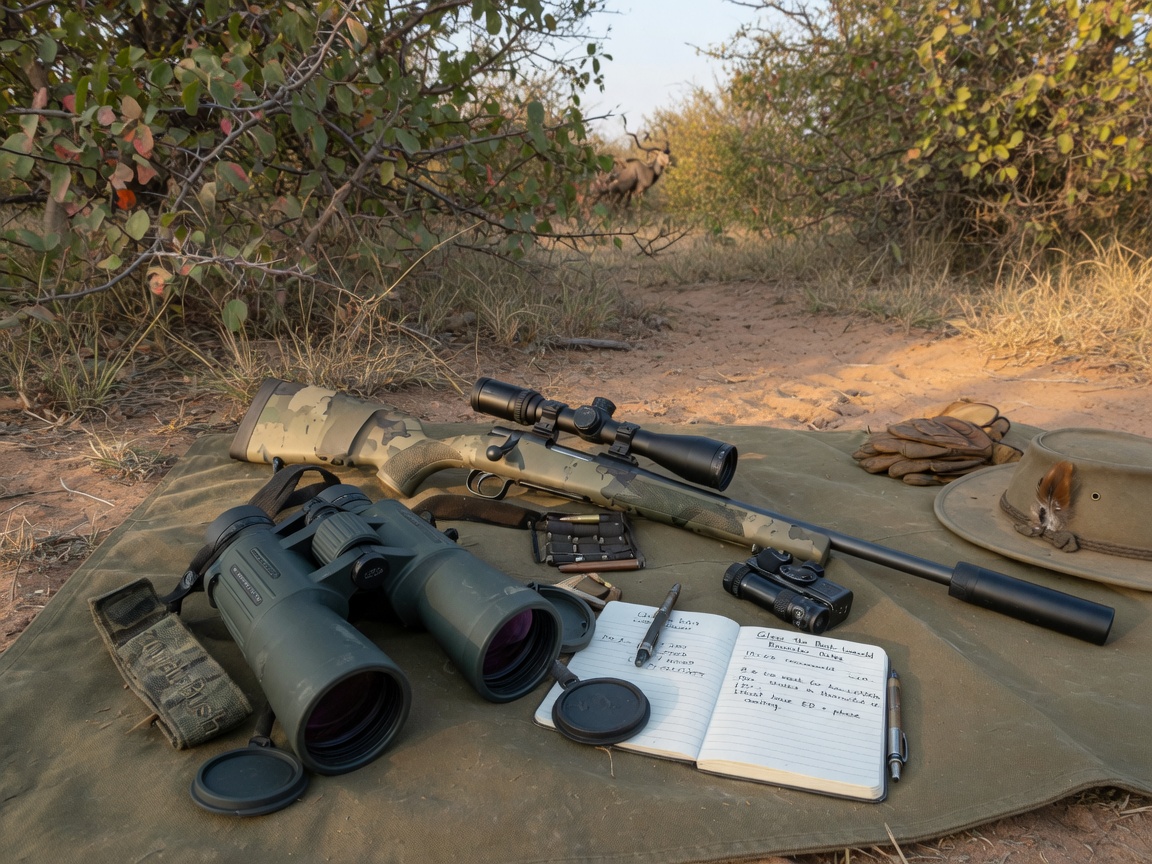
The Lowveld of southern Africa offers some of the most rewarding spot-and-stalk hunting on the planet. Rolling acacia thornveld, mopane woodland and riverine thickets hide kudu, impala, nyala, bushbuck and warthog that can appear and vanish in seconds. In this environment your binoculars become an extension of your eyes. They let you locate animals at distance, judge age and sex accurately, plan a quiet approach and make an ethical shot. Poor glass leads to missed opportunities, misidentification and sometimes wounded game. Quality binoculars help you hunt smarter and support the conservation model that keeps these landscapes wild.
Lowveld conditions are demanding. Days are hot and dusty. Heat shimmer distorts distant images by mid-morning. Light changes quickly from the golden hour to harsh overhead sun and then to deep shade under the canopy. Sudden storms can soak gear. Vegetation ranges from open vleis to thick jess that limits visibility to 50 metres or less. Spot-and-stalk usually starts with glassing from a rise, termite mound or vehicle, followed by a careful foot approach. You need optics that scan efficiently, deliver sharp detail through haze and survive knocks, dust and sweat.
Magnification is the first choice most hunters debate. Eight-power binoculars give a wider field of view and are easier to hold steady during long sessions. They pick up movement in thick cover more readily and produce a brighter image because the exit pupil is larger. Ten-power models reveal more horn detail and body condition at 300 to 400 metres, which helps when you must decide whether an animal is a shooter. The trade-off is a narrower view and more noticeable handshake. Many professional hunters who work the Lowveld year-round favour 8x42 for everyday versatility. Ten-by-forty-two becomes the better option if you regularly hunt more open sections or rest the binoculars on a shooting stick or vehicle window. Image-stabilised models exist but add cost and weight that most stalkers prefer to avoid.
Objective lens size controls light gathering. A 42 mm front lens strikes the best balance for this terrain. It collects enough light for dawn and dusk work without becoming bulky. Compact 32 mm binoculars save weight for hunters who cover many kilometres on foot, yet they lose some brightness when the sun drops. Fifty-millimetre glasses are brighter still but feel heavy after a few hours and snag more easily in thorn. Look for fully multi-coated lenses and extra-low-dispersion glass. These coatings and glass types cut glare, boost contrast and reduce colour fringing so you can tell a grey kudu bull from a grey bush even in shimmer. Phase-corrected roof prisms keep the image crisp from edge to edge.
Durability cannot be an afterthought. Waterproofing to IPX7 and nitrogen or argon purging stop internal fogging when you step from an air-conditioned bakkie into 35-degree heat or when a thunderstorm hits. Thick rubber armour protects against thorn scratches and the occasional drop onto rocky ground. A magnesium or polycarbonate chassis keeps weight down while remaining stiff. The focus wheel must turn smoothly with sweaty or dusty fingers and the diopter adjustment should lock so it does not wander. Eye relief of at least 16 mm matters if you wear sunglasses or prescription glasses.
Weight and carry system decide whether you actually use the binoculars all day. Target 700 to 850 grams for an 8x42 or 10x42 pair. A simple neck strap works for short sessions, but a properly fitted binocular harness keeps the glasses tight to your chest, stops them swinging when you crouch through thicket and lets you raise them instantly. Practice mounting them so the motion becomes automatic.
Field of view should be generous. Aim for at least 110 metres at 1 000 metres with 8x glasses so you can sweep large areas quickly. Close focus down to two or three metres is a bonus for examining tracks or insects but is not essential. Some newer models add built-in rangefinders. These can be useful for judging stalk distance, yet many hunters still prefer a lightweight dedicated rangefinder and keep the binoculars simple and optically superior.
Budget shapes what you can buy, but it should not dictate poor performance. Solid entry-level binoculars in the 200 to 400 dollar range will get you started, yet they often lack the resolution and toughness needed for repeated African seasons. Mid-range options between 500 and 1 500 dollars from established makers deliver excellent glass, strong warranties and the coatings that cut through haze. Premium European binoculars cost more but offer lifetime optical performance, unmatched colour fidelity and resale value. Whatever you choose, buy from a dealer who understands hunting and can discuss real-world Lowveld use.
In the field, technique matters as much as the tool. Glass from shade whenever possible to reduce glare and heat distortion. Scan in a grid, starting close and working outward. Look for parts of animals rather than whole silhouettes: the flick of an ear, the curve of a horn, the horizontal line of a back. Keep lenses clean with a blower and lens pen; dust is abrasive and will scratch coatings if wiped dry. After rain or heavy dew, dry the binoculars thoroughly before storage. Most quality brands now offer transferable, no-fault warranties that cover almost anything that can happen on a hunt.
Good optics also serve conservation. Accurate identification prevents the taking of undersized or female animals where regulations forbid it. Clear views of shot placement reduce wounding loss. Ethical hunting funds anti-poaching units, habitat work and community programmes that keep wildlife on the land. When you can glass a mature kudu bull at 250 metres and confirm it is the right animal, you honour both the quarry and the system that conserves it.
Choosing binoculars for Lowveld spot-and-stalk ultimately comes down to matching the instrument to the country and to your own style. An 8x42 or 10x42 pair with quality glass, robust construction and comfortable carry will serve you for many seasons. Spend time learning their feel so that raising them becomes second nature. The right binoculars will show you more game, help you make better decisions and deepen your connection to one of Africa’s great hunting landscapes.
Visit our gear section for current model comparisons or drop a comment with the binoculars you trust in the Lowveld. Clear views and straight shooting.