Proper field dressing is essential for meat quality and food safety when hunting big game across southern Africa. Whether you have taken a kudu bull in the Limpopo bushveld, a gemsbok on the red dunes of the Kalahari, an impala ram in the Lowveld, or a warthog in the Eastern Cape thickets, correct technique in the field ensures you get the most from your harvest and honour the animal. Heat is the constant enemy in this region. Daytime temperatures in the Karoo, Namib desert fringes, Highveld grasslands and mopane woodlands of Zimbabwe and Botswana can climb quickly, so speed, cleanliness and rapid cooling matter more than almost anything else.
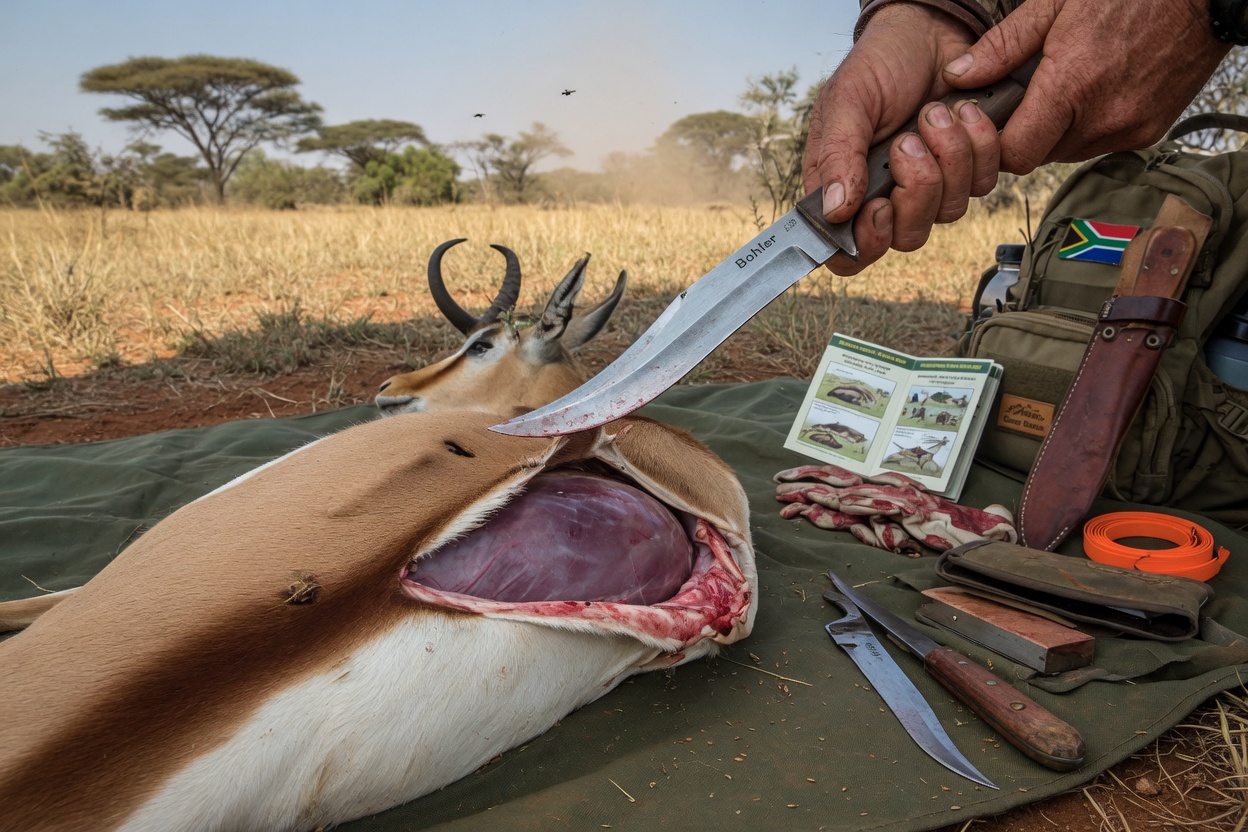
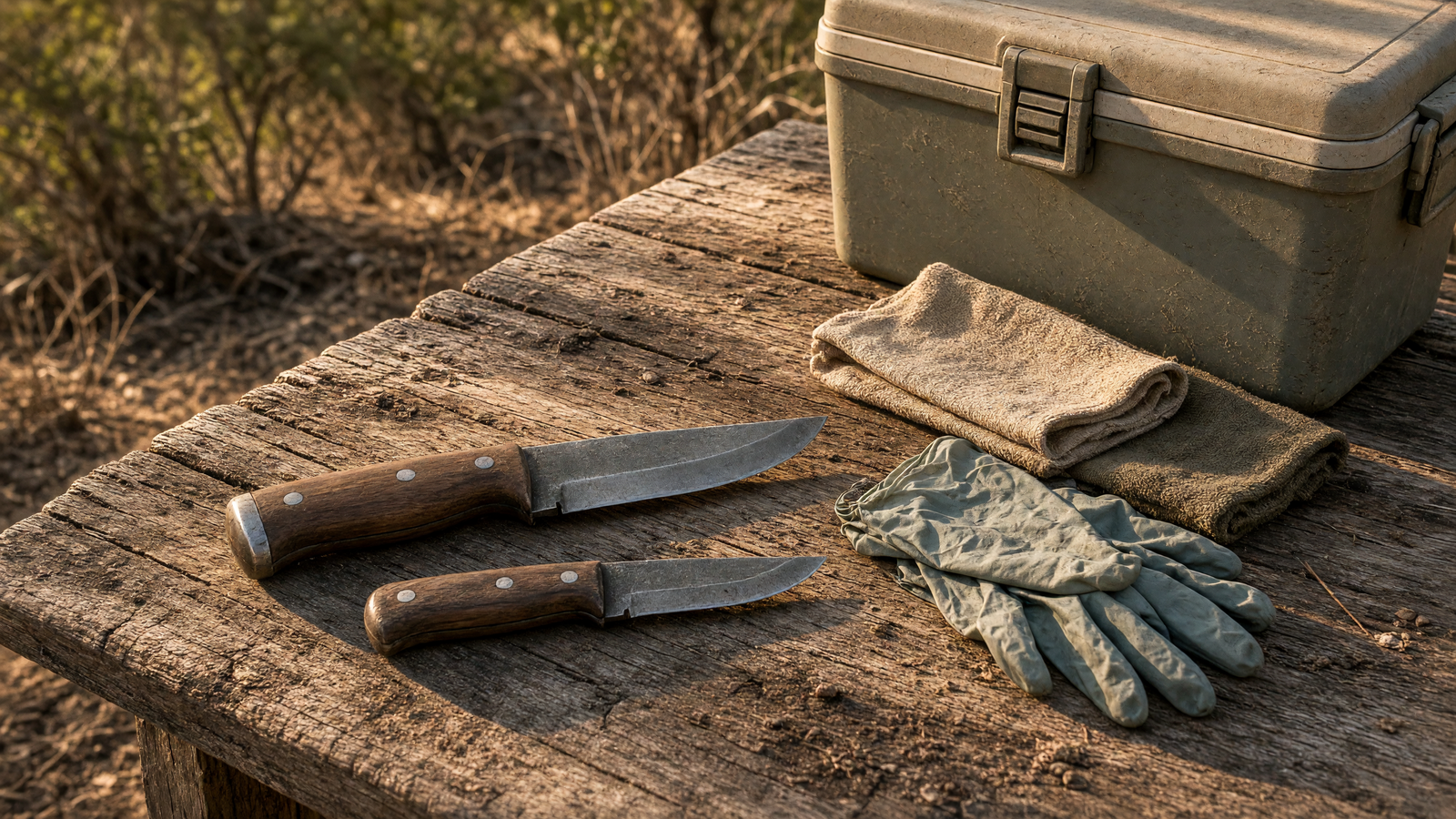
Preparation begins before the shot. Carry sharp, clean knives suited to the job: a sturdy fixed-blade skinning knife and a shorter gutting knife are standard among professional outfitters from South Africa through Namibia and Zambia. Wear latex or nitrile gloves to reduce contamination and protect yourself when handling animals that may carry disease. Position the animal on a slight incline with the head uphill whenever the terrain allows; this is practical on the rocky slopes of the Waterberg or the sandy pans of the Kalahari. Have clean rags or paper towels, a bone saw for larger species such as eland, buffalo or sable, and breathable game bags ready. A cooler box with ice or frozen bottles should already be in the hunting vehicle, because once the cavity is open the clock is running.
Begin by making a careful initial incision from the breastbone back toward the pelvis, cutting through the hide and thin abdominal wall without puncturing the paunch or intestines. On thick-skinned animals such as buffalo, gemsbok and mature eland the hide is tough and the abdominal wall thicker, so controlled pressure and a sharp tip are essential. Cut around the anus and free the rectum, tying it off with string if gut contents threaten to spill; this step is especially important with warthog and wildebeest, which often carry heavy parasite loads or messy digesta. Work the knife carefully along the diaphragm and reach forward to free the windpipe and gullet. Roll the carcass and allow the entrails to drop clear, then remove the heart and liver if you intend to keep them. Many hunters in Botswana and Namibia prize the heart and liver of springbok and impala for camp meals the same evening. Rinse the cavity only with clean water if it is truly available and free of dust; in remote concessions water is often scarce, so wiping with clean cloths is preferable to introducing dirty moisture. Prop the cavity open with a stick so air can circulate while you prepare for loading.
Advanced work depends on the species, the distance back to the skinning shed, and whether a trophy mount is required. Caped skinning for taxidermy is common on kudu, nyala, sable and buffalo. Make the usual dorsal cuts and cape well forward of the shoulders so the taxidermist has enough hide; keep the cape cool and salted as soon as possible, particularly in the humid Lowveld or coastal Mozambique. Quartering in the field is standard practice when packing out eland, buffalo or large gemsbok from roadless areas of the Kalahari or the Zambezi Valley. Separate the shoulders, remove the backstraps and tenderloins, and bone the haunches if weight must be reduced for a long carry. Boning out meat entirely is sometimes necessary on foot safaris or when loading light aircraft in remote Namibia and Botswana. Always keep quarters and boned meat off the ground and in clean game bags to keep sand, mopane flies and bush debris away.
Food safety rules are non-negotiable in the southern African climate. Cool the meat as quickly as possible; get it into shade, into game bags, and onto ice within the first hour whenever you can. Keep meat clean and dry. Monitor the internal temperature of large muscle masses on eland and buffalo, because residual heat stays trapped long after the surface feels cool. In hot Lowveld or Karoo conditions, plan to process or at least break the carcass into smaller pieces the same day. Understand local disease and testing requirements. Chronic wasting disease is not the issue here that it is elsewhere, but bovine tuberculosis and foot-and-mouth disease zones exist in parts of South Africa, Kruger-adjacent areas and some Zimbabwean and Zambian concessions. Follow your outfitter’s and the relevant nature conservation authority’s instructions on movement permits and carcass inspection. Many lodges and professional hunters insist on immediate hanging in a cooled skinning shed with good airflow.
Essential tools and supplies for southern African conditions include more than just knives. A compact bone saw or folding saw handles the heavy leg bones of gemsbok, wildebeest and buffalo. Quality game bags that breathe yet keep flies off are worth packing in every vehicle. Plenty of ice or frozen water bottles, sanitising wipes or diluted bleach solution for knives and hands, and a roll of paper towel complete the kit. In dusty Kalahari or Namib conditions, a clean tarpaulin gives you a place to work without grinding grit into the meat. Always carry spare gloves; blood and stomach contents ruin grip and hygiene fast when you are dealing with a large kudu or eland bull.
Transport and legal considerations vary by country but share common themes. Ensure the animal is properly tagged or marked according to the permit conditions of South Africa’s provincial authorities, Namibian MET rules, Botswana DWNP, Zimbabwe Parks, Zambian Department of National Parks and Wildlife, or Mozambican regulations. Keep meat cool during the drive back to camp; an open bakkie under the African sun will ruin a springbok in less than an hour if quarters are left uncovered. At camp, hang carcasses or quarters in a well-ventilated, fly-proof skinning shed or cold room. Process within a sensible timeline: in midsummer Highveld or Lowveld heat this may mean the same afternoon; in cooler Karoo winters you have more leeway. Dispose of offal and waste according to camp rules and local regulations so scavengers are not drawn into the hunting area and so disease risk is minimised.
Different biomes demand small adjustments. In the open Kalahari and Namib you may field-dress on bare sand with excellent airflow but intense radiant heat, so shade and speed are critical. In dense Limpopo or Zambezi bushveld, thorns and limited space make a disciplined sequence of cuts more important, and you may need to drag the animal a short distance to a clearer spot. Eastern Cape and Karoo rocky ground often gives you a natural incline for drainage. Warthog require extra care around the gut because of their diet and the risk of taint; many PH teams prefer to gut them immediately and keep the carcass well aired. Buffalo and eland are heavy, hot animals; multiple people, a winch or bakkie hoist, and rapid quartering are often the difference between prime meat and a spoiled load.
Taking time to field dress properly is part of ethical hunting in southern Africa. It shows respect for the kudu, impala, gemsbok, sable or buffalo you have been fortunate to take, protects the quality of the venison that will feed the hunting party and the staff, and meets the professional standards expected by outfitters from the Cape to the Caprivi. Master the basic cuts, adapt them to the species and the biome, keep everything as cool and clean as the African day allows, and you will bring home meat worthy of the hunt.