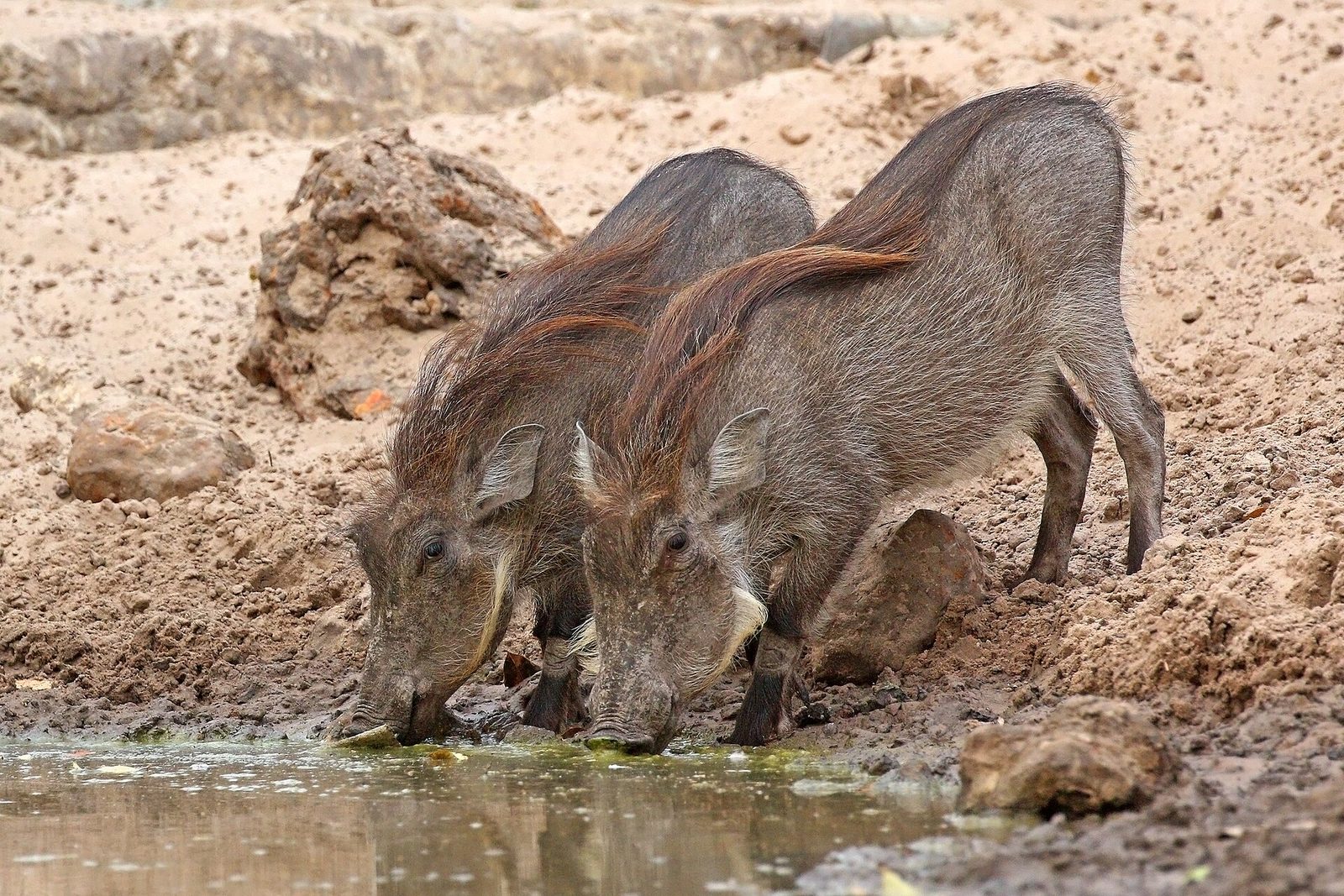
There is a unique thrill that comes from waiting in the still, shimmering heat of an African summer as warthogs pick their way toward a shrinking waterhole. Dust hangs in the air. The only sounds are insects and the occasional distant grunt. For the bowhunter, this is prime time. When surface water becomes limited, warthogs grow predictable, and that predictability creates outstanding close-range opportunities with a bow.
Warthogs are tough, wary, and surprisingly athletic. They offer a genuine challenge that rewards patience and woodsmanship more than expensive equipment. This style of hunting also sits comfortably with modern conservation thinking because it focuses harvest on abundant animals while generating revenue that protects habitat. The following tactics come from years of sitting waterholes across southern and eastern Africa and from conversations with professional hunters and wildlife biologists who manage these populations.
Warthogs visit water almost daily during the hot, dry months. Sows with piglets often arrive in the cooler morning hours, while mature boars may show up later or even at midday when the heat is fiercest. They usually approach from downwind, pause at the edge to scan, then drop to their knees or simply stand to drink. Their eyesight is average at best, but their noses are excellent. Any human scent drifting toward the water will send them trotting off with tails held high. Studies of warthog movement in Kruger and private conservancies confirm they rarely travel more than a few kilometers from reliable water in peak summer, which is why a well-chosen hole can produce consistent action.
Start scouting weeks ahead if possible. Walk the edges looking for fresh tracks, muddy wallows, and the characteristic knee prints they leave while grazing nearby. Trail cameras have changed the game. Cellular models let you confirm timing without repeated visits that educate the animals. Place cameras on approach trails rather than right at the water so you do not create a new scent post. Look for holes that offer both drinking access and nearby shade or cover where the pigs feel secure. Avoid the most obvious, heavily used spots that every hunter already knows. A slightly smaller, more secluded pan often holds less pressured animals.
Once you have chosen a location, build or place your hide with wind as the first priority. A simple pop-up blind brushed with local grass and thorn works well, or you can dig a shallow pit if the soil allows. Keep the shooting window between 18 and 28 yards. That distance gives a comfortable pin and still allows the arrow to hit with authority. Arrive in the dark and stay late. Midday can be surprisingly productive when temperatures climb above 38 Celsius and everything else seeks shade. Bring more water than you think you need, a light chair, and insect repellent. Summer waterholes attract mosquitoes and tsetse in some areas.
Gear should be simple and reliable. A compound or recurve in the 55- to 65-pound range with a well-tuned rest and a heavy arrow (at least 450 grains finished) gives the penetration needed for a warthog’s thick hide and heavy shoulder. Fixed-blade broadheads in the 100- to 125-grain class have proven themselves on countless animals. Practice kneeling and sitting shots because that is how you will often shoot. A quality rangefinder and a pair of binoculars complete the kit. Leave the extra gadgets at home. The less you move, the better.
Shot placement on a warthog is straightforward if you wait for the right angle. The vitals sit behind the shoulder and slightly lower than many hunters expect. A broadside or mild quartering-away presentation is ideal. Avoid shots at walking animals or those facing you. The high, muscular shoulder can stop or deflect an arrow that is even a few inches forward. After the shot, mark the spot and wait at least 45 minutes unless you see the animal go down. They are tenacious and can cover ground even when hit well. Follow-up is part of ethical hunting. A wounded warthog that is not recovered is a failure, not a story.
Hunting ethics go beyond the shot. Take only what you will use. Warthog meat is lean, flavorful, and excellent when cooked properly. Tusks and hides make meaningful trophies that remind you of the hunt. Never shoot a sow with small piglets at heel if you can identify her. Leave the breeding nucleus intact. Work with outfitters who operate on quota systems and who contribute to anti-poaching and community programs. In Namibia, South Africa, and parts of Zimbabwe, regulated hunting of warthogs helps keep numbers in balance with habitat and reduces crop raiding, which in turn reduces conflict with local farmers.
Recent camera-trap surveys and hunter-return data from several conservancies show warthog populations remaining stable or increasing under sustainable harvest. That is the model we should support. Climate patterns are shifting and some traditional water sources are becoming less reliable, which makes responsible hunting even more important. Your license fee and daily rates help fund water-point maintenance, fencing, and ranger patrols that benefit every species, not just the ones we hunt.
A few extra field tips can tilt the odds. After a rare summer storm, give the animals a day or two; they will drink from puddles and skip the main hole. Learn the difference between a contented grunt and an alarm snort. If a sounder arrives and one pig stares hard at your hide, freeze. They often relax if nothing moves. Keep your release aid on the string or your fingers ready so the draw is smooth and quiet. And always have an exit plan. Summer thunderstorms can turn a dry pan into a muddy trap in minutes.
Bowhunting warthogs over summer waterholes is more than a method. It is a lesson in patience, wind, and respect. When everything comes together and a heavy boar stands broadside at 22 yards, the moment feels earned. That is the feeling that keeps us coming back, and it is the same feeling that should remind us to hunt cleanly and leave the country better than we found it.
If you have sat a waterhole yourself, add your experiences in the comments. We all learn from each other. For more African hunting tactics or to connect with ethical outfitters, browse the rest of the site and start planning a hunt that matters.