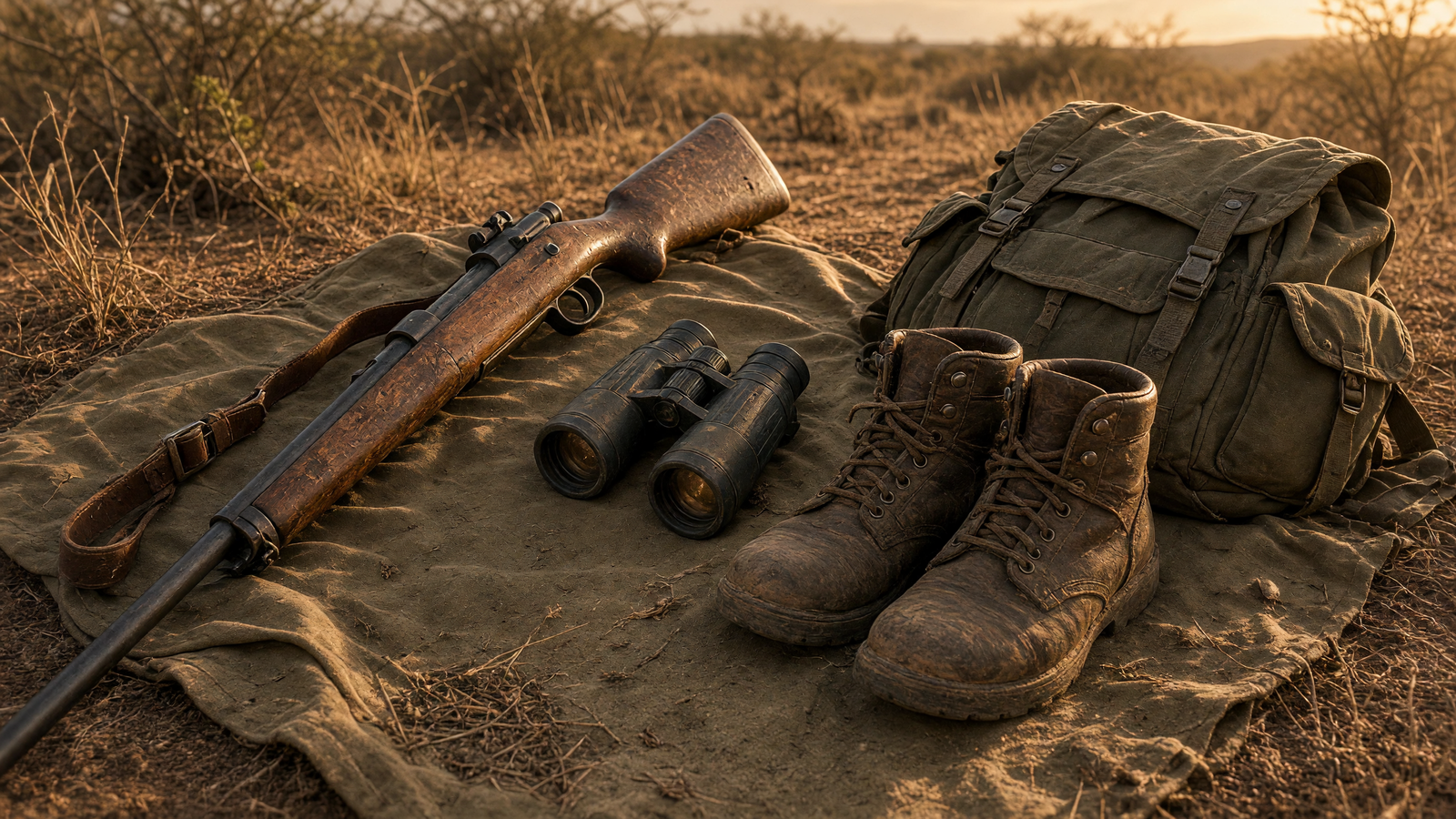
When preparing for your first hunt in southern Africa, the right gear makes the difference between a safe, successful outing and a difficult one. Whether you are heading into the Kalahari thornveld for springbok and gemsbok, the Limpopo bushveld after kudu and impala, the Eastern Cape for kudu and bushbuck, the Karoo for springbok, or the Lowveld and Highveld for wildebeest, warthog, nyala, eland or sable, your kit must match the biome, the climate and the game. Conditions range from dry heat and dust to cold Highveld nights and sudden thunderstorms, so plan accordingly and always confirm current permit, licence and season rules with your outfitter and the relevant provincial or national authority in South Africa, Namibia, Botswana, Zimbabwe, Zambia or Mozambique.
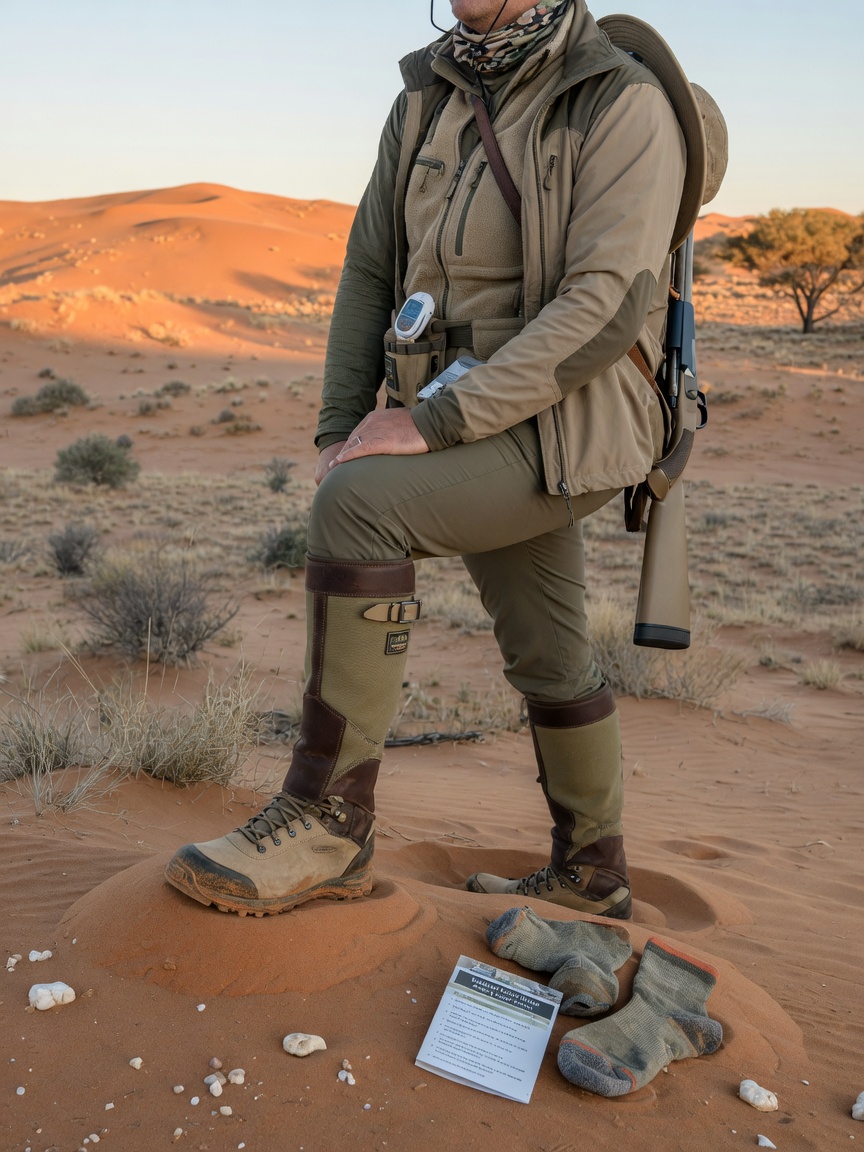
Clothing is your first line of defence. Choose lightweight, durable camouflage suited to local vegetation rather than generic patterns designed for northern forests. Bushveld and Lowveld hunters often favour greens and browns that break up the outline among mopane, acacia and mixed woodland, while Kalahari and Namib-edge hunts call for sand and khaki tones. A moisture-wicking base layer keeps you comfortable during long stalks in heat, and a light insulating layer is essential for early mornings and evenings on the Highveld or in the Karoo. A wide-brimmed hat or cap with a neck flap protects against the sun, and a blaze or hunter-orange vest or hat remains wise where local regulations or outfitter policy require high visibility, especially on multi-hunter concessions. Quality gloves that still allow trigger or release control help with thorn bush and rope work. Insulated or sturdy leather boots with aggressive tread are non-negotiable; the ground can be rocky, sandy or littered with thorns, and you will cover long distances on foot. Break them in well before the trip. Gaiters are worth packing for seed grass and snake country.
Your primary weapon must be appropriate for the species and legal in the country you are hunting. For plains game such as impala, springbok, blesbok, warthog, wildebeest, kudu, gemsbok, eland, nyala and sable, a well-sighted bolt-action rifle in a calibre suited to medium and large antelope is standard, with many outfitters recommending something in the .270 to .375 range depending on the animal and local preference. Practice extensively from field positions before you arrive. If you are bowhunting, confirm that the concession allows it and that your setup meets minimum kinetic energy and draw-weight rules where they apply. Bring sufficient ammunition or arrows of proven performance; supply in remote areas can be limited. A sharp, fixed-blade hunting knife with a full tang is indispensable for field dressing and skinning. Carry a compact sharpener. Many first-time hunters underestimate how quickly a blade dulls on tough hide and bone.
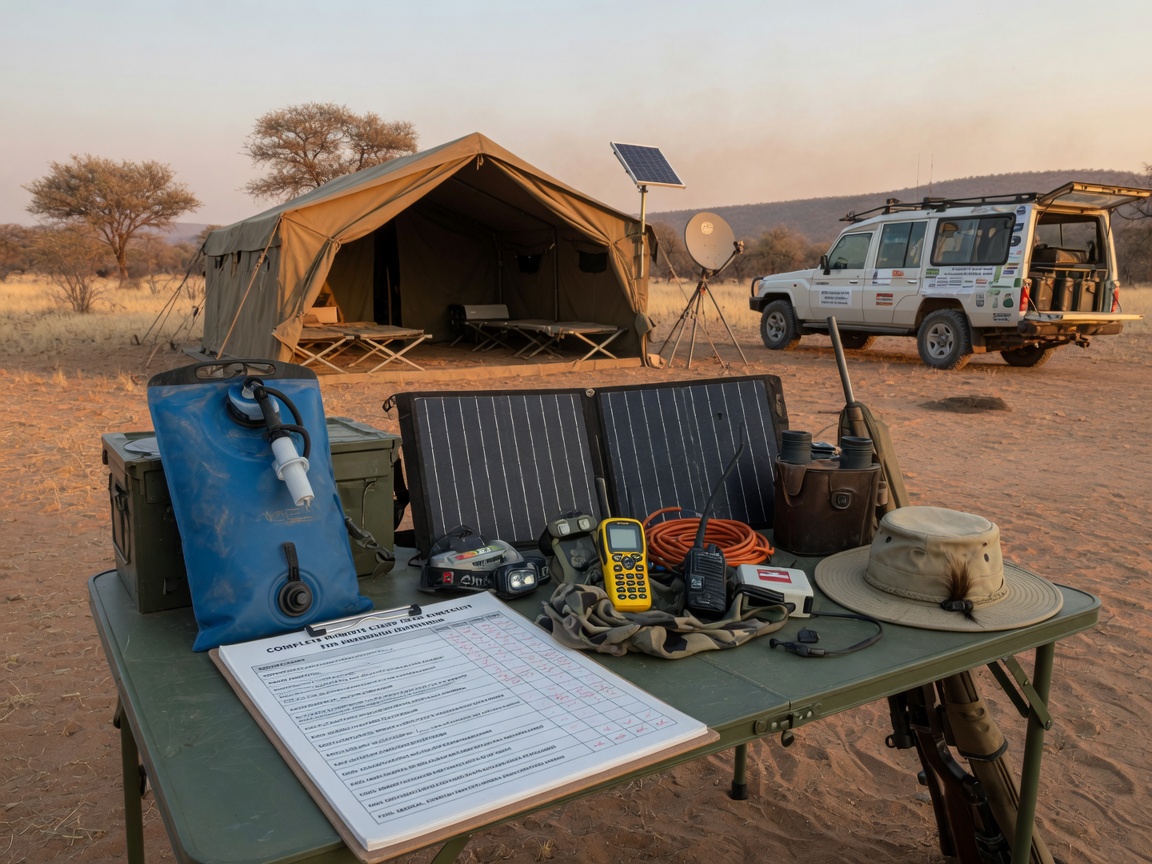
Navigation and light matter in vast African landscapes. A GPS unit or a smartphone loaded with offline maps of the concession, plus a power bank, helps you stay oriented in the bushveld or open Kalahari. A reliable headlamp with spare batteries is essential for pre-dawn starts, tracking at last light, and work around camp. A small two-way radio or, on more remote concessions in Namibia, Botswana or the Zambezi valley side, a satellite communicator provides a safety link when mobile coverage disappears. An emergency whistle is light and useful.
Field care of meat and trophies is central to ethical hunting in the region. Pack game bags that allow air flow while keeping flies off the carcass. A cooler box with ice or frozen bottles is needed for transporting meat back to the lodge or butcher, especially in hot Lowveld and Kalahari conditions where spoilage sets in fast. Paper towels, wet wipes and a box of nitrile gloves keep the process cleaner and more hygienic. Your outfitter will usually handle the bulk of recovery and skinning on larger animals such as eland or buffalo, but you should still understand the basics and be ready to assist. For dangerous game such as buffalo, which is hunted in parts of South Africa, Namibia, Zimbabwe, Zambia, Botswana and Mozambique under strict quota and guiding rules, you will be accompanied by a professional hunter; your gear still needs to be reliable, and you must be fit enough for the follow-up.
Safety and paperwork come before any shot. Complete a recognised hunter education or firearm competency process as required in your home country and ensure you meet the host country’s import and hunting licence requirements. In South Africa you will typically need a hunting licence and species-specific permits or tags arranged through the outfitter; Namibia, Botswana, Zimbabwe, Zambia and Mozambique each have their own permit systems, seasons and protected-species lists. Carry proof of licences, permits and identity. A compact first-aid kit should include trauma dressings, antiseptic, blister care, rehydration salts and any personal medication. Know the location of the nearest medical facility and the outfitter’s emergency plan. Snakebite protocol and awareness of local venomous species should be discussed before you walk into thick bush.
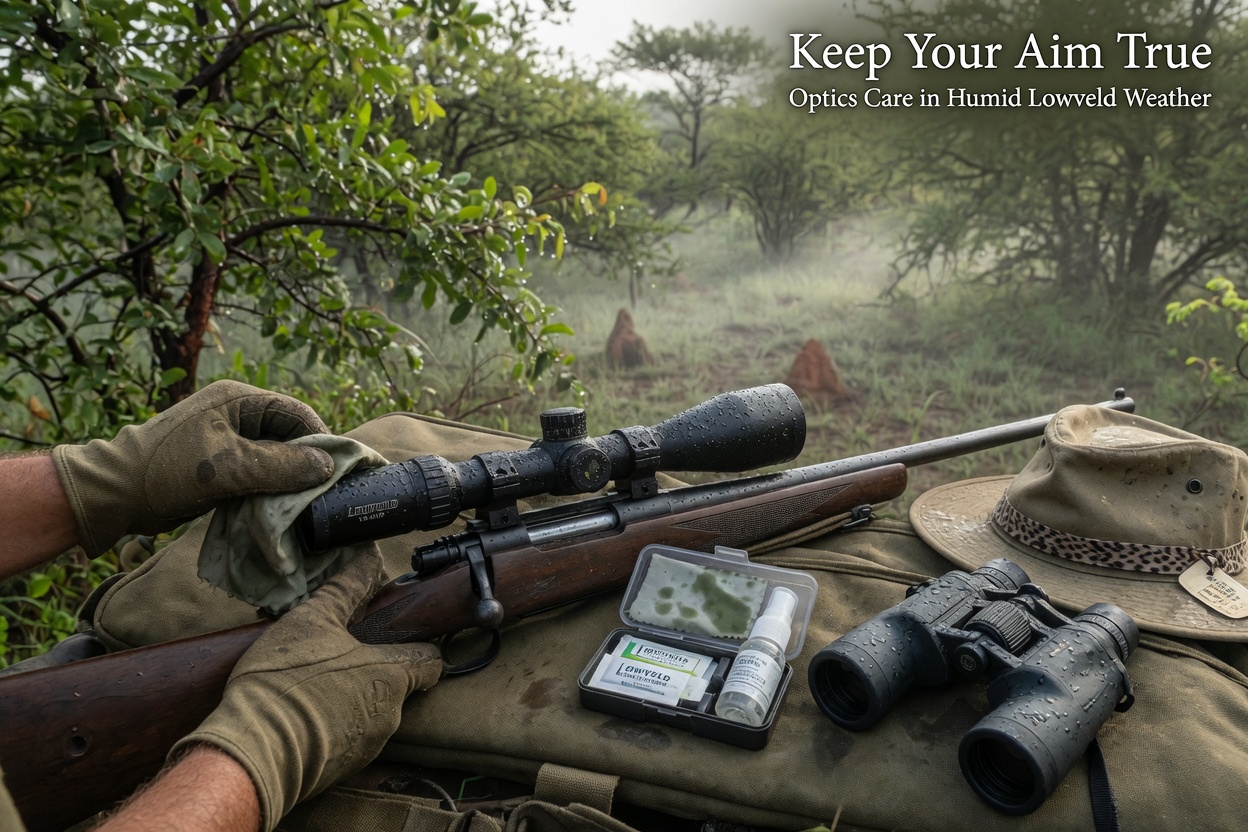
Water and sun protection are easy to overlook until you are hours from the vehicle. Carry more water than you think you need, or confirm that the hunting party has adequate supply. High-SPF sunscreen, lip balm and polarised sunglasses reduce fatigue and long-term damage. Binoculars in the 8x or 10x range with good low-light performance help you glass for kudu in dense riverine bush or pick out gemsbok on open flats. A rangefinder is increasingly useful for ethical shot placement in open country.
Start with gear that is proven and appropriate rather than buying every accessory on the market. Hire or borrow what you can for a first safari if budget is tight, but never compromise on boots, optics quality, knife sharpness, water and communication. Speak to your professional hunter or outfitter well in advance; they know the specific concession, the prevailing weather for the season, and any camp or vehicle limitations. Many camps in the Eastern Cape, Limpopo, Kalahari and Namibian concessions can advise on calibre restrictions, camouflage norms and what is already provided. Build your kit around the hunt you have booked, the species you are after, and the realities of southern African terrain. Quality equipment, proper licences and respect for local regulations turn a first hunt into the foundation of many more seasons in the bush.