Scouting for White-tailed Deer
While white-tailed deer belong to the Americas, the core discipline of reading ungulate sign, patterning daily movement, and placing yourself undetected between cover, food and water transfers directly to southern African plains-game hunting. Hunters who have spent years scouting whitetails will recognise the same logic when they step into the Limpopo bushveld, the Kalahari, the Eastern Cape thickets, the Karoo, the Lowveld or the Namibian escarpment. The species change—kudu, impala, gemsbok, springbok, wildebeest, eland, nyala, sable, warthog and buffalo—but the scouting fundamentals remain the hunter’s greatest advantage before joining a professional hunter or outfitter.
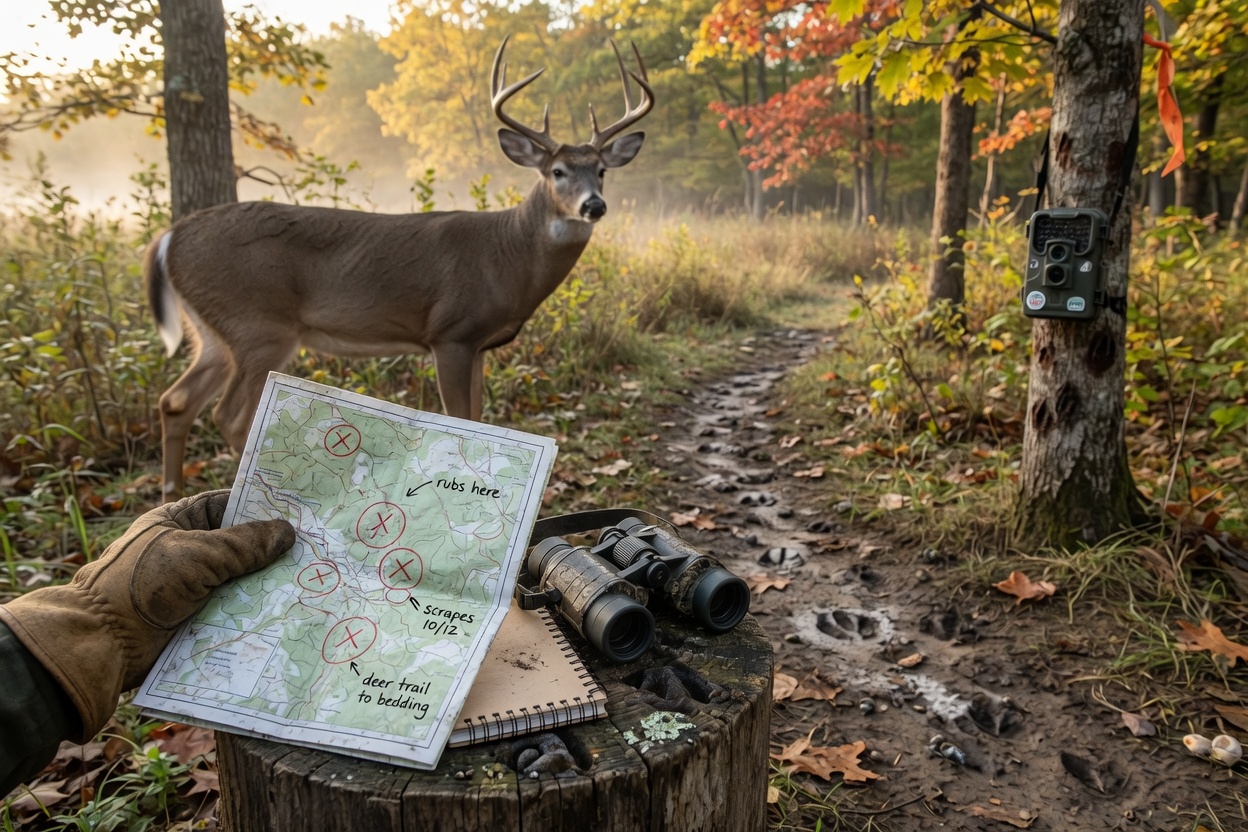
Successful hunting in South Africa, Namibia, Botswana, Zimbabwe, Zambia and Mozambique begins months before the rifle comes out of the case. Pre-season work on a free-range concession or game ranch reveals how animals use the landscape once the dry-season hunting months arrive. Trail cameras placed on approaches to waterholes, along well-worn game paths through mopane or acacia, and near mineral licks quickly show which bulls or rams are resident and what times of day different species move. In arid zones such as the Kalahari and the fringes of the Namib, water is the single strongest magnet; permanent earth dams, solar pumps and river pools concentrate impala herds, solitary kudu bulls and warthog sounders. In higher-rainfall bushveld and Lowveld country, food sources and shade thickets become equally important. Note browse lines on preferred shrubs, freshly broken branches where eland or kudu have fed, and the polished trails that link bedding cover to feeding areas.
Sign interpretation is learned on the ground. Fresh tracks in soft Kalahari sand or Limpopo river mud tell species, direction and approximate time of passage. Kudu leave large heart-shaped imprints; impala tracks are neat and pointed; gemsbok and wildebeest show the heavier mark of open-country travellers. Dung form varies with diet—fibrous pellets from pure browsers, darker and sometimes clumped droppings from animals using agricultural edges or lush drainage-line grass. Territorial males advertise themselves: impala rams thrash small bushes, sable and roan horn-rake saplings, and during the rut many antelope open scrapes or dung middens under overhanging branches. These markers, combined with bedding depressions in thick cover, give a clear picture of how mature animals are using a block of veld.
Modern tools simply extend traditional observation. Cellular trail cameras let you monitor remote water points without repeated vehicle traffic that educates game. Handheld GPS units and offline mapping apps record exact locations of sightings, tracks and potential hide sites across large concessions where one ridge looks much like the next. Satellite imagery reveals drainage lines, isolated thickets and fence lines that funnel movement. Weather and wind apps matter enormously; a shift in the prevailing south-easterly or the arrival of a cold front can empty one waterhole and fill another overnight. Moon-phase data helps predict night-time traffic to water, information your professional hunter can use when deciding whether a morning sit or an afternoon still-hunt is more productive.
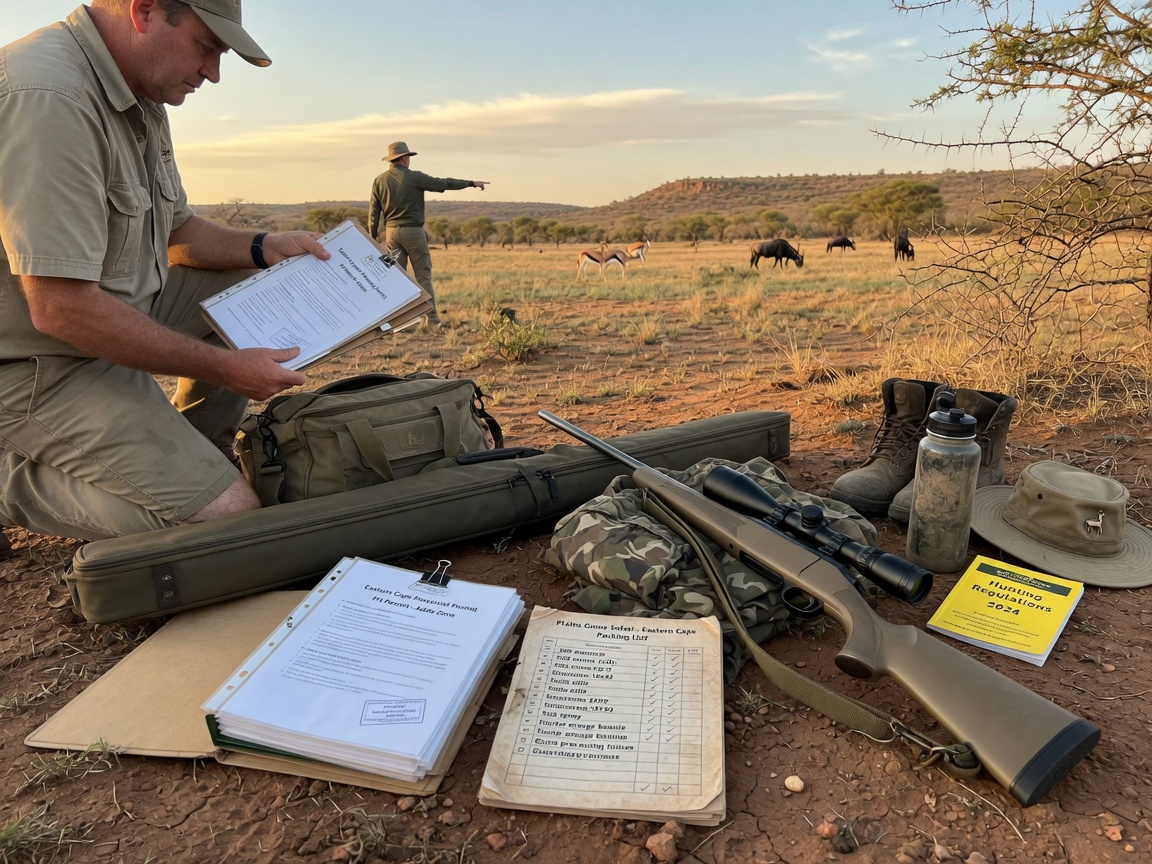
Timing must follow the southern African calendar. Most plains-game seasons run through the dry winter months, roughly April to September or October, though exact dates, bag limits and permit requirements differ by country and by province or conservancy. Confirm current regulations with your outfitter well in advance—South African provincial ordinances, Namibian freehold and communal conservancy rules, Botswana concession quotas and Mozambican coutada systems all carry their own paperwork, and CITES documentation is required for certain species if trophies will be exported. Late-summer and autumn scouting, while temperatures are still high, identifies which pans are permanent and which food patches animals will rely on once the rains stop. Once the season opens, switch to low-impact methods: glass from distance, check cameras remotely, and avoid walking prime areas except when hunting.
Placement of blinds, hides or ambush points follows the same bedding-to-feeding logic used for whitetails, adapted to local terrain and hunting styles. Set up along trails that connect thick riverine or koppie bedding cover to feeding areas or water. In dense Limpopo or Zululand bush, elevated blinds or well-brushed ground hides overlooking a path used by nyala and bushbuck work well. On the open Karoo or Kalahari plains, use natural contours, termite mounds or low portable blinds, always with meticulous attention to skyline and wind. Prevailing wind and daily thermal shifts dictate every approach; have alternative sites ready for days when the breeze swings. Plan entry and exit routes that keep you off ridgelines and out of open pans where zebra, wildebeest or baboons can spot movement and alert every other animal within earshot. On foot-safari concessions common in Botswana, Namibia and parts of Zimbabwe, scouting also means memorising silent routes through broken ground so the final stalk can be executed without detection.
Water remains the tactical centrepiece across much of the subcontinent. A single reliable hole in the late dry season can draw kudu, gemsbok, impala and warthog on predictable schedules—warthogs often at midday, larger antelope in the first and last hours of light. Scout these sites first by glassing from a distant vantage rather than driving straight in. In wetter Highveld grasslands or Eastern Cape valleys where water is less limiting, focus instead on preferred grazing flushes after fire or rain and on the edges of heavy cover where eland and black wildebeest trade security for feed.
Glass from high ground whenever the terrain allows. The Waterberg, Soutpansberg, Namibian escarpment and broken Kalahari dunes reward patient glassing at first and last light. Look for the horizontal line of a back, the flick of an ear, or dust raised by a moving herd. When tracks are fresh in soft sand, the classic African skill of tracking still outperforms any camera. Your professional hunter will have years of knowledge about the specific concession; combine that local intelligence with the sign and patterns you record and the odds improve dramatically.
Finally, operate inside the law and the ethic of the region. Hunt only with licensed professional hunters, on properties with valid permits and current quotas. Respect closed seasons, night-hunting restrictions that apply to most plains game, and any veterinary control zones. The more thoroughly you understand the daily and seasonal rhythms of the animals and the particular biome you will hunt—whether mopane veld, Kalahari thornveld, Karoo scrub or Lowveld savanna—the more effective and respectful your hunt becomes. Scouting is not a preliminary chore; it is the foundation of consistent success and of the deep satisfaction that comes from earning a fair encounter with southern Africa’s game.